
Giving a team access to an AI tool is not the same as helping it change how it works. People can understand the announcement and still be unsure what good use looks like, what happens when the tool is wrong, or whether the new process simply adds hidden work.
A useful team change starts with a small, honest question: what would make this change helpful in our actual work? That is the purpose of a Change Check.
Why a normal rollout misses the important part
Most rollouts move from announcement to expectation. The team receives a new tool, a training session, and a vague request to use it more. Friction appears later in private workarounds, missed handoffs, and retrospective comments after the habit has already hardened.
An anonymous check creates room to name that friction while it is still cheap to change. Ask every participant to rate clarity and confidence, then invite two short answers: what feels risky, and what small experiment is worth trying? The goal is not to survey the team forever. It is to find one learning move.
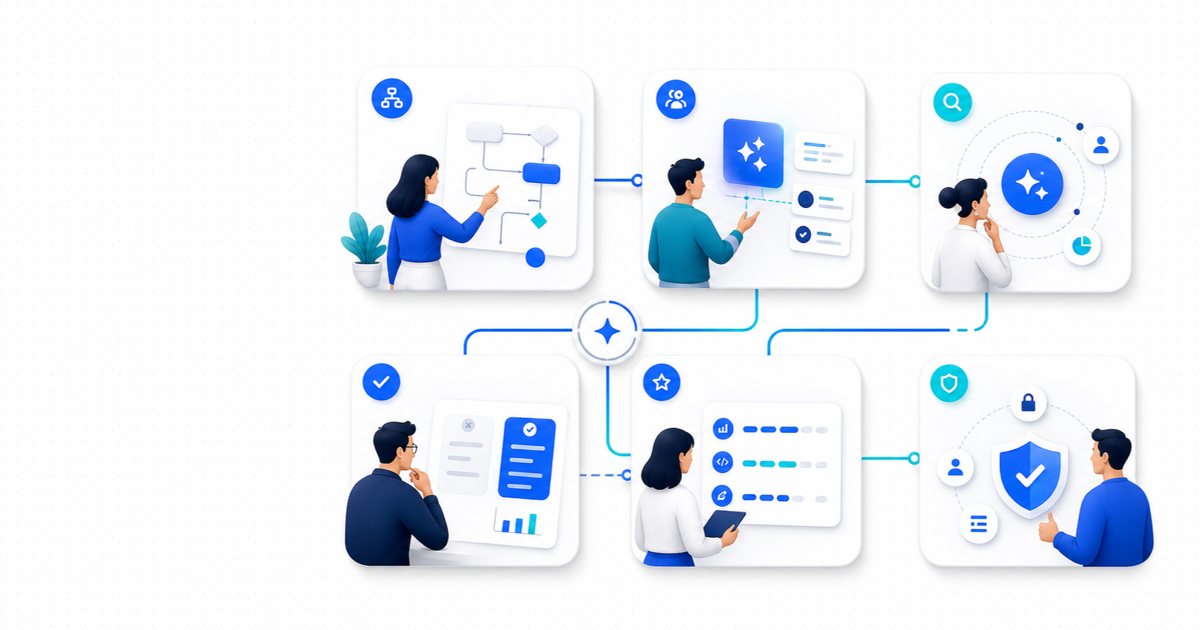
Run the loop in four steps
- Check. Share one private link. Participants answer anonymously in under two minutes.
- Choose one experiment. Turn the strongest theme into a hypothesis, an owner, a review date, and one visible success signal.
- Collect first signals. During the sprint, let people report whether the change feels better, the same, or worse.
- Review. Bring the evidence into the next retro and choose: keep, adapt, or stop.
Make the experiment specific
“Use AI more” is an aspiration, not an experiment. A stronger version is: “For the next two weeks, engineers use the approved coding assistant for test scaffolding only. We expect faster test setup without more review rework. We will check pull-request review comments and anonymous confidence signals on Friday.”
That gives the team permission to learn rather than perform enthusiasm. It also produces a decision that future teammates can understand.
Use Change Loop when the stakes are human
AI adoption is the obvious starting point, but the same practice works for a new support handoff, a launch process, an on-call change, or a team agreement. If a change affects how people make decisions together, it deserves more than a project plan.
Start a free Change Check in NextRetro and turn the next team change into a small, visible learning loop.