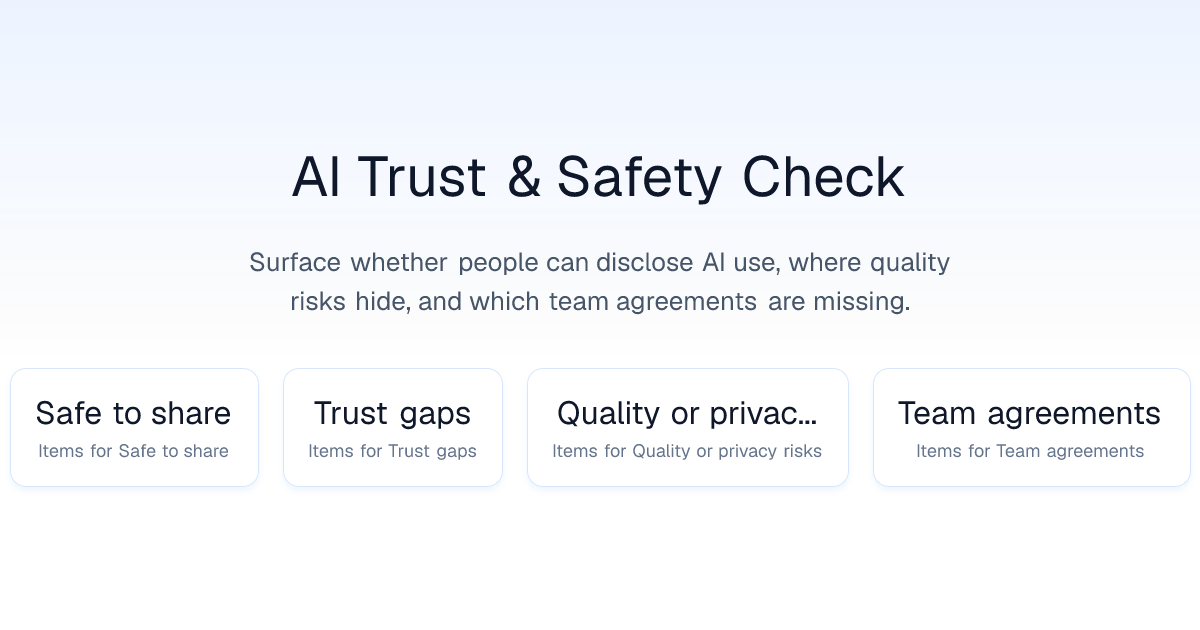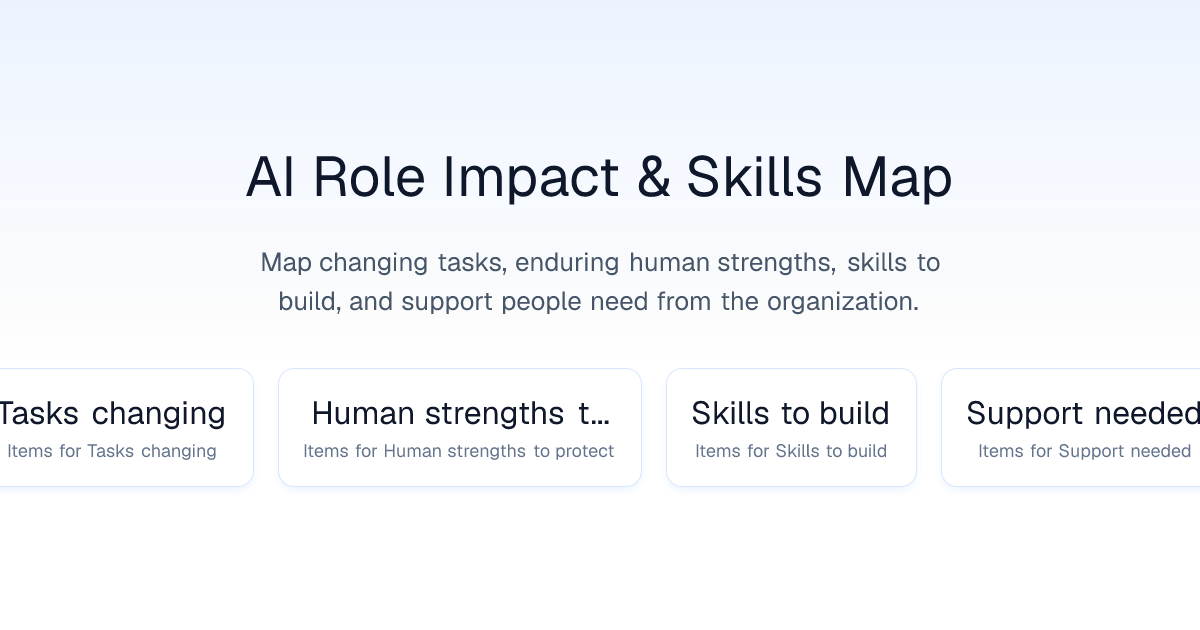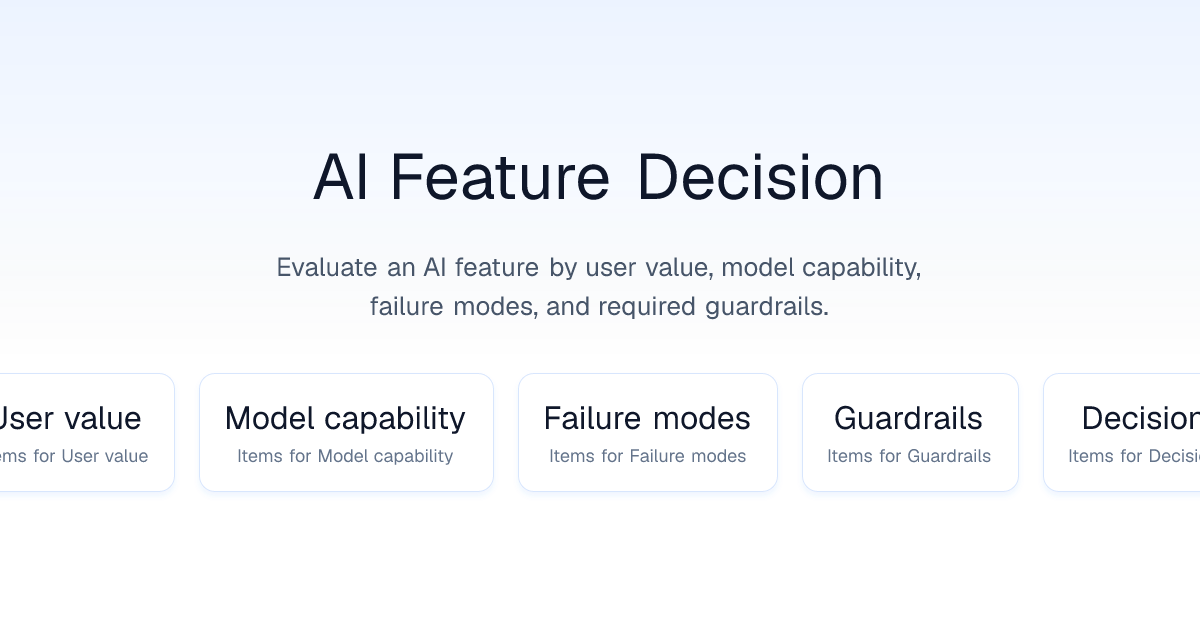

The AI Workflow Retrospective helps a team evaluate AI inside the real workflow rather than measuring adoption by logins or tool access. It separates useful acceleration from hidden review work, quality risk, and tasks where human judgment still creates the value.
How the AI workflow retrospective works
Ask the team to add concrete examples from the last sprint. Capture where AI helped, where a person made the decisive judgment, where rework or risk appeared, and one next experiment. The goal is not to prove that AI is good or bad. It is to improve the system of work.
Finish by choosing one experiment small enough to review in the next retrospective. Give it an owner and one success signal such as cycle time, review corrections, customer quality, or team confidence.
How to facilitate
- 1Use examples, not opinions. Name the task, tool, output, and outcome.
- 2Count review work. Time saved in drafting is not a gain if checking and correction take longer.
- 3Protect human judgment. Identify decisions where context, ethics, empathy, or accountability must remain explicit.
- 4Choose one experiment. Change one workflow boundary for one sprint and review the signal.
When to use this template
Use this template after introducing a coding assistant, AI research tool, meeting assistant, content workflow, support copilot, or internal agent. It works best once the team has enough real usage to compare useful and harmful patterns.